
Severed Brakes & Hyperactive Alarms:
Decoding the Neurobiology of the Post-TBI Relationship
If your brain's brakes are severed from the accelerator pedal, a minor back ache ceases to be a joint issue—it becomes a survival crisis.
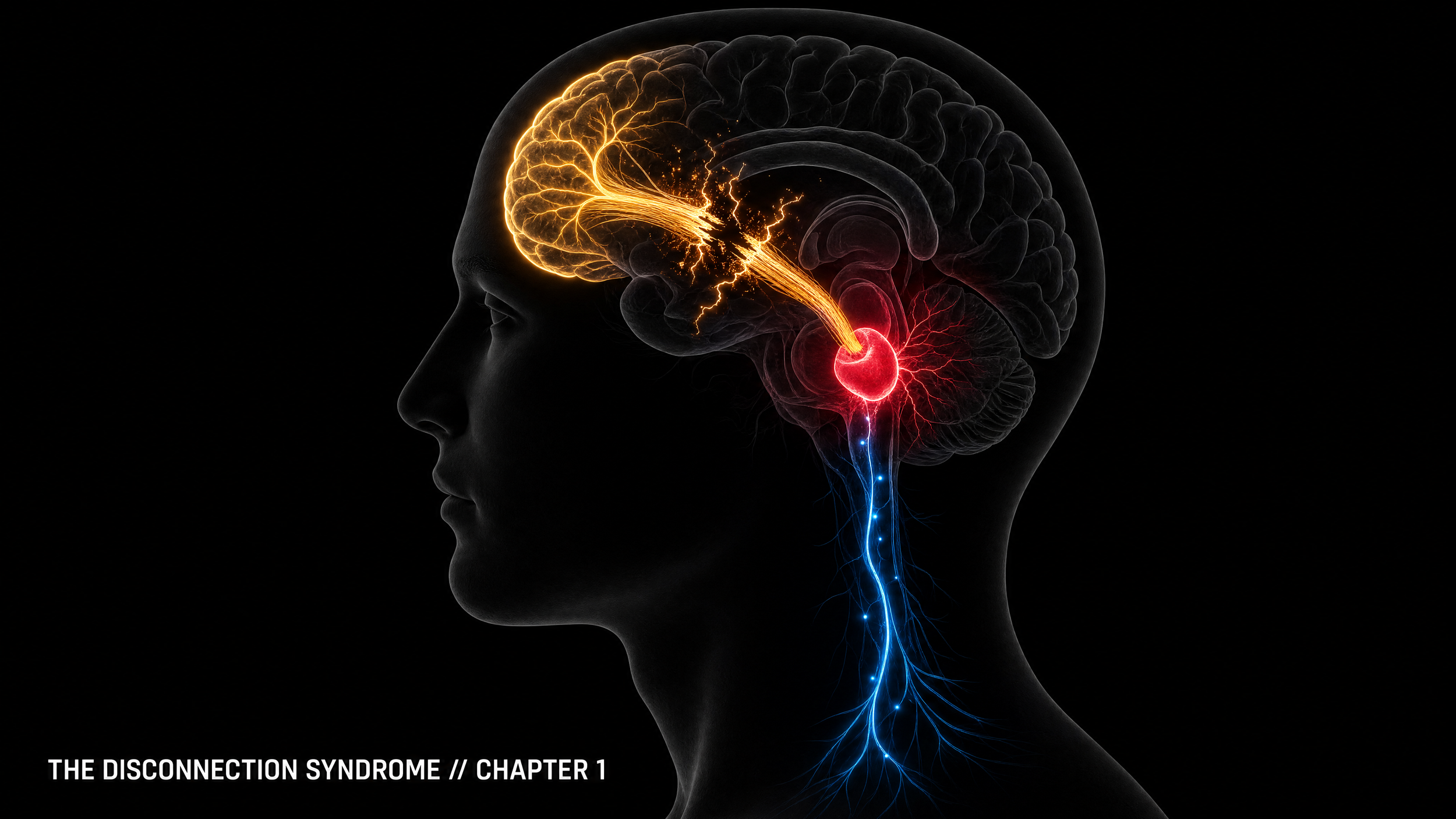
In this foundational clinical investigation, Thommo maps the invisible architecture of Blast-Induced Neurotrauma (BINT) and Diffuse Axonal Injury (DAI). Moving past standard "bedside manner" care models, this paper uncovers how microscopic lesions physically decouple the logical prefrontal cortex from a hyper-vigilant amygdala.
The result? A pathological "Somatic-Emotional Feedback Loop" where the somatosensory cortex interprets everyday physical joint and visceral organ pain as evidence of a life-threatening emergency, locking the survivor into permanent sympathetic nervous system dominance.
Written at a university post-graduate level, this work outlines the critical mechanics of Interpersonal Co-regulation — proving that warm, oxytocinergic social buffering is not an emotional luxury, but a biological and clinical necessity to manually override a broken nervous system. When a brain injury or severe trauma damages your "internal brakes," your brain loses the ability to calm itself down. Intellectual logic stops working. If your body feels an ache or a pain, your brain immediately panics and treats it like a life-or-death emergency.
Because your internal wiring is temporarily broken, you cannot talk yourself out of that panic. You physically cannot produce the "all-clear" signal on your own. The only way to shut off that false alarm is to hit a manual override switch from the outside. When your partner steps in with a long, warm hug, a soft voice, or a calming presence, it triggers a massive rush of a hormone called oxytocin in your body.
That physical affection acts like an emergency kill-switch for stress. It bypasses your broken logical pathways and forces the brain's panic center to shut up, lowering your actual physical pain and bringing your body back to a safe, restful state.
In short: When your own brain's brakes are broken, you have to borrow someone else's brakes until yours are repaired. Comfort isn't just a nice gesture—it's literal medicine.