
The Sensory Tax- Quantifying the Metabolic Cost of Strained Neural Gating in the Post-Traumatic Brain
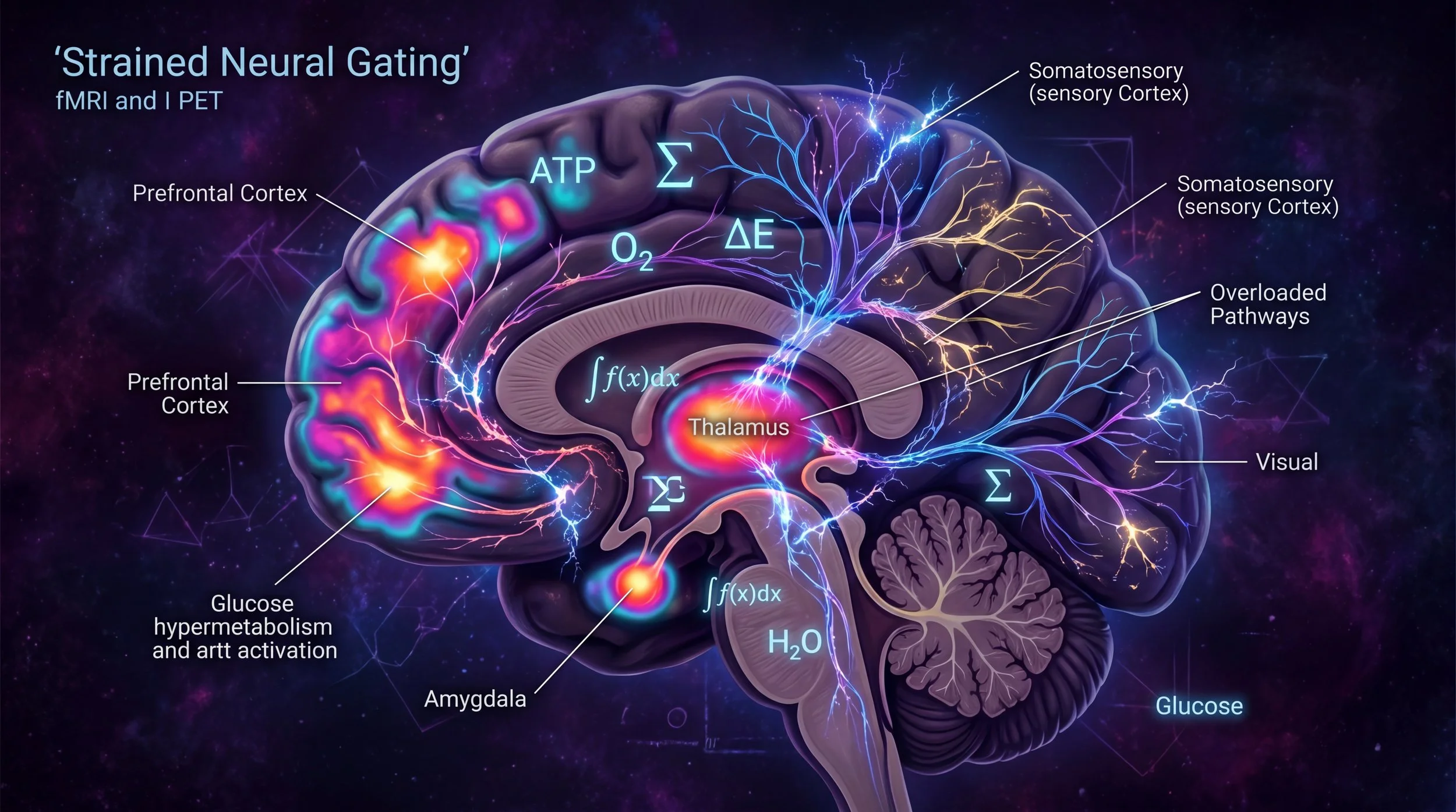
If your brain’s internal filters are broken, a scratchy t-shirt label or a humming supermarket light bulb ceases to be a minor annoyance—it becomes a literal electrical drain on your survival vault.
Why does standing in a crowded room or wearing a stiff collared shirt leave you feeling completely flat, emotionally numb, and biologically broken?
In this second foundational research paper, Thommo strips away the psychological abstractions of trauma recovery to expose a brutal cellular reality: strained neural gating is a state of constant energy insolvency.
When neurotrauma takes your internal biological bouncer—the thalamus—completely offline, ordinary background noise and visual clutter are granted unthrottled VIP access to your primary cortex. Every single piece of ambient environmental data forces your neurons to fire wildly and repeatedly, levying an un-gated "sensory tax" that forces your sodium-potassium (Na+/K+ -ATPase) pumps into maximum overdrive.
This paper provides the exact biological math showing how this relentless baseline expenditure burns through your cellular electricity ($ATP$) like a wildfire, actively triggering localised microglial neuroinflammation, damaging mitochondrial DNA, and locking your HPA axis into a permanent, cortisol-driven survival loop that poisons your body’s remaining healthy engines.
More importantly, this dispatch provides a practical, actionable blueprint for Manual Sensory Load Optimisation. It proves that aggressively reducing mechanical and visual friction through loose apparel, seamless fabrics, and muted visual environments is not a lifestyle preference, an act of laziness, or an emotional indulgence—it is a strict, precisely engineered clinical defense mechanism required to preserve the finite metabolic currency your brain desperately needs to undergo neuroplastic repair.
Stop waiting in the dark. Read the science, protect the battery, and engineer your own healing.